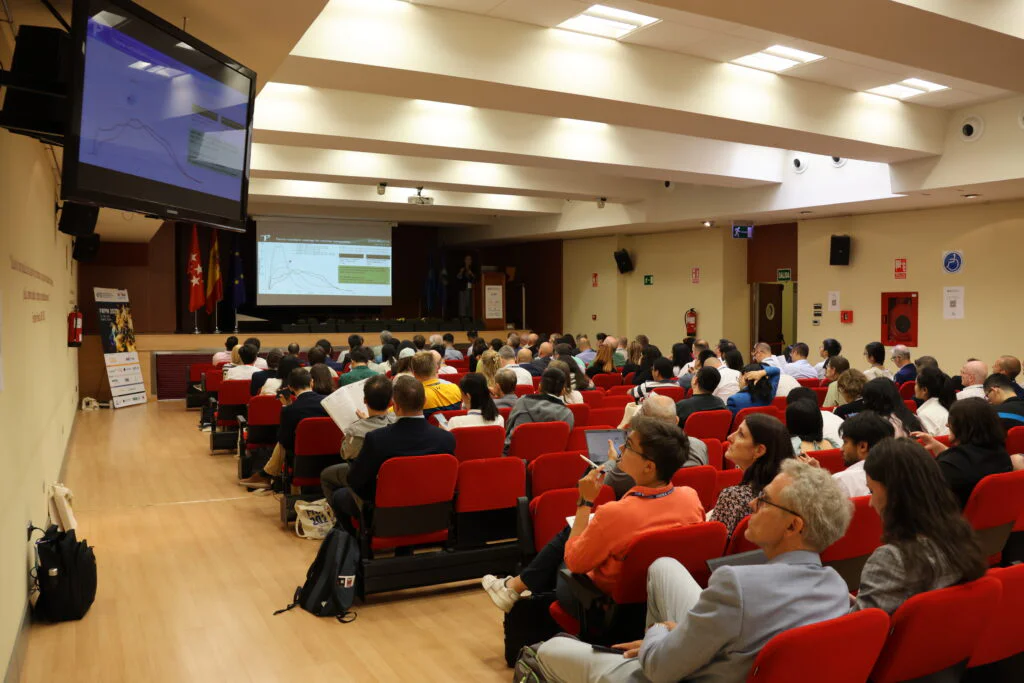
Summary of FRPM Conference 2025 (Flame Retardant Polymeric Materials)
The 20th FRPM conference (Fire Retardant Polymeric Materials), Madrid 3rd – 6th June 2025, https://frpm2025.org/ brought together nearly 300 participants from 22 countries, 120 presentations and over 40 posters.
Summaries of previous FRPM conferences: FRPM 2023, Zurich (pinfa Newsletter n°151), FRPM 2019, Turku (pinfa Newsletter n°105).
The 2025 FRPM conference was opened by José Miguel Atenza, Director of Civil Engineering School of Polytechnic University of Madrid (UPM), José Manuel Torralba, Director of IMDEA Materials Institute and De-Yi Wang, Director of Novel Materials Division of IMDEA Materials Institute, Conference Chair, with a special talk on artificial intelligence and materials science by Klaus Mainzer, President of the European Academy of Sciences and Arts.
Given the number of presentations at FRPM25, this pinfa Newsletter provides takeaway messages and summaries of only a small part of the many presentations.
Policy
Adrian Beard, Clariant, Chairman of pinfa, outlined the concept of “Safe and Sustainable by Design” (SSBD) to flame retardants. The objective of making chemicals SSBD was announced in the EU’s “Chemicals Strategy for Sustainability Towards a Toxic-Free Environment” (2020), and a framework is set out in the EU JRC Technical Report “Safe and Sustainable by Design chemicals and materials” (2019). This framework is set to be revised and completed in 2025. pinfa has worked on defining SSbD for flame retardants and on application of the concept to member companies’ PIN flame retardants.
For pinfa, SSbD for flame retardants should look at chemical hazards, life cycle (production impacts through to recycling properties), critical raw materials, smoke and toxicity in fires and social impacts (including performance benefits in use applications).
A case study of Clariant’s aluminium diphosphinate used in polyamide 66 was presented. This PIN FR shows no chemical hazards other than persistence, with low toxicity risk for workers and low risks for consumers. LCA shows slightly lower carbon footprint and other environmental impacts than brominated FR plus antimony trioxide (see pinfa Newsletter n°159, Maga et al. 2024). Fire smoke toxicity is comparable to the neat polymer and lower than with brominated FR.
Jürgen Troitzsch, Fire and Environment Protection Service FEPS, Germany, discussed regulatory developments for construction product fire safety in Europe. In particular:
- The recast EU Construction Products Regulation (entered into force 7th January 2025) focuses strongly on environmental impacts and will progressively (from 2026 to full implementation in 2040) require mandatory declaration of CO2 emissions, of all environmental impacts and of LCA for all construction products placed on the EU market.
- EU-funded studies to develop a medium-large scale fire test method for building façade materials are now completed (RiSE – BAM – Efectis 2024) and it is now expected that the European Commission will mandate CEN to develop a corresponding EN standard (test method).
- The EU published a tender (closed 7/4/2025) to support Member States on fire safety for electrification and renovation of buildings linked to the Energy Performance of Buildings Directive (EPBD).
- In particular, under the EPBD, installation of photovoltaics into buildings will accelerate. Photovoltaics are covered by different fire safety standards depending on installation: EN 50583 for photovoltaic systems integrated into buildings, IEC/EN 61730 for self-standing photovoltaic systems. Standards and test methods for IEC/EN 61730 are not yet finalised.
Innovative PIN FRs
Imran Waseem, ICL-IP, outlined the need to develop viable fire safety solutions for polyurethane foams, given that the currently widely used additive chlorinated flame retardant TCPP has now been classified as Cat.2 carcinogenic with also questions on endocrine disruption. Polyurethane foams are widely variable: rigid, spray and soft foams, using many different polyols and isocyanates at different ratios, and various catalysts and cross-linking agents. Fire performance is influenced by the nitrogen content (PIN FR effect), isocyanate content (charring) and foam density and cell form (open or closed cells). ICL-IP has developed an innovative non-halogenated, phosphorus based reactive monofunctionalised (one hydroxyl group) flame retardant solution, for use in PIR and PUR insulation foams, which offers similar fire performance to TCPP at comparable loadings (12%), but with lower smoke, similar thermal insulation and better mechanical strength. Because the new PIN FR reacts into the foam, it is stable and durable, without migration, so offering sustainability benefits. It is compatible with existing foam processes, chemically binding into the foam during production (see pinfa Newsletter n°166).
Fouad Laoutid, Materia Nova Research Center, Mons, Belgium, discussed using mechanochemistry to phosphorylate bio-based materials to produce eco-friendly PIN flame retardants. Mechanical modification is distinct from chemical, solvent-based or heat modification. Ball-milling is effective because it is low-cost, high throughput, generates temperature increase and shear forces by high-speed rotation and allows control of pressure, temperature, mixing and time. Tests were carried out mechanically reacting phosphorus pentoxide (P2O5) to phosphorylate tannic acid and cellulose. Eco-friendly separation processes were employed: precipitation in an aqueous KOH solution for tannic acid, and simple filtration for cellulose. The resulting phosphorylated molecules were then tested as PIN flame retardants in polypropylene. They showed good fire performance, with a peak heat release reduction exceeding -50%.
Jaime Grunlan, Texas A&M University, USA, summarised developments in polyelectrolyte applications of PIN flame retardants (PEC = polyelectrolyte complex, see pinfa Newsletter n°167). Polymers with opposite electrical charges can be permanently reacted onto substrates by soaking or dipping with a pH change. Application can be two-pot or one-pot (e.g. pH change induced by ammonia evaporation). Examples presented included poly(allylamine hydrochloride) and poly(sodium phosphate) on cotton and polyester-cotton, achieving ASTM D4613 vertical flame (1 minute 1-pot dip, 7% weight gain on the fabric, -93% reduction in peak heat release rate). The fire performance remained after five water rinses. Fire performance can be improved by adding also borate, resulting in glassy char. A similar surface application was shown for open-cell polyurethane foam for seats (squeeze-soak). Application to wood (OSB- orientated strand board) in a 2-pot process using also citric acid gave an aesthetically invisible coating (c. 6% added weight on a ~ 6 mm thickness board) resulting in butane torch resistance (vertical self-extinguishing, heat not significantly reaching the rear side of the board). Other applications under development include one-dip coating with UV fixing.
Li Chen, National Engineering Laboratory of Eco-Friendly Polymeric Materials, Sichuan, China, summarised development of reactive phosphorus PIN flame retardants for epoxy resins. Bis-phosphaphenanthrene containing polyester and a DOPO-based phosphorus activated polyurethane both achieved UL 94 V-0 (3 mm) when reacted into epoxy at 4 – 10% loading (0.5% P), with also improvements in mechanical performance, most notably a 166% increase in impact strength.
Yajun Chen, Beijing Technology and Business University, China, summarised a range of tests of phosphoramidates as flame retardants in TPUs (thermoplastic polyurethanes). See also H. Shi et al. 2025, summarised below. Different small molecule and high molecular weight phosphoramidates and cross-linked phosphoramidates were able to achieve UL 94 V-0 (3.2 mm) in TPU at <30% loadings (c. 6% P in TPU), with improved heat release and LOI and lower smoke emissions, without significantly deteriorating transparency. She concluded that these phosphoramidate PIN FRs offer interesting fire safety solutions for transparent TPUs. They melt during processing so providing good polymer compatibility. Higher molecular weight phosphoramidates avoid the plasticiser effect of smaller molecules and cross-linking improves the water stability of the TPU.
Jenny Alongi, Università degli Studi di Milano, Italy, summarised testing of environmentally friendly and easily synthesised compounds, based on polyamidoamines (PAAs), as polymeric PIN flame retardants for cotton. PAAs derived from natural α-amino acids, some containing phosphorus and/or sulphur, were tested as PIN FRs for cotton, also in synergy with calcium salts and montmorillonite. To achieve vertical self-extinguishing behaviour, copolymerization or synergistic effects with clays or calcium ions were necessary. In all cases, PAAs and PAA-based complexes promoted the dehydration of cotton in fire rather than depolymerisation. Toxicity tests on the functionalized PAAs showed no adverse effects on Lepidium sativum L. seed germination or Danio rerio (zebrafish) embryos. This FR treatment of cotton is not wash-durable and studies are underway to graft the FRs onto the cotton fibres.
PIN FRs and recycling
Katalin Bordacsne Bocz, Budapest University of Technology and Economics, Hungary, presented testing of PIN flame retardants (AlPi aluminium phosphinate, MPP melamine polyphosphate, MMT montmorillonite) in recycling post-consumer PET (bottles) to foams and injection moulded plates (see also pinfa Newsletter n°143). The recycled PET foams showed fire resistance, good thermal insulation qualities, strength (resulting from crystallinity), high light reflection (90%, so “white” even from mixed input PET). Conclusions are that the PIN FRs are effective and compatible in PET recycling, with uniform dispersion during processing being important.
Mercedes Santiago-Calvo, Foundation for Transport and Energy Research and Development (CIDAUT), Valladolid, Spain, presented tests of PIN flame retardants in PET recycling. The aim is to upgrade post-consumer PET (coloured bottles) to E&E applications using a chain extender to restore polymer characteristics. With the 10% PIN flame retardant (3,9-Dimethyl-2,4,8,10-tetraoxa-3,9-diphosphaspiro[5.5]undecane-3,9-dioxide) from pinfa member Thor and 0.8% chain-extender peak heat release rate was reduced by -52%. Foamability tests were also performed. See also pinfa Newsletter n°165 and Santiago-Calvo et al. 2024 https://doi.org/10.1007/s10924-024-03424-0
Federico Carosio, Politecnico di Torino, Italy, presented tests of PIN FR coatings applied to waste fibres to deliver both fire performance and structural strength. Rice husks have low structural value because of their high silicon content: freeze-drying of layer-by-layer (FD-LBL) coated rice husk resulted in a self-extinguishing material with increased mechanical strength. Cellulose fibres FD-LBL coated with chitosan and sodium hexametaphosphate were self-extinguishing with very low heat release and very low smoke production. The coating material is effectively acting both as fire protection and glue between the fibres. Combination of these two coated materials enabled production of lightweight, porous composite panels (60 – 70 kg/m3) showing excellent fire safety properties and good compressive strength. This could provide a route to produce structural materials with fire performance from waste fibre materials with low loads of added polymer and PIN FR.
Vera Realinho, Universitat Politècnica de Catalunya, Barcelona, Spain, presented tests of waste cork powder functionalised with a phosphoramidate (dimethyl-3-triethoxysilanepropylphosphoramidate - DTSP) as a PIN flame retardant in ABS. At 30% loading corresponding to 2.4% phosphorus content, the phosphoramidate-cork reduced peak heat release rate by nearly -60% compared to unmodified cork. This is considered to result from P-O-C and Si-O-C crosslinked char formation and a reduction in flammable volatiles.
Lin Chen, Sichuan University, Chengdu, China, presented research into recyclable polyesters, by copolymerisation of PET monomers (ethylene terephthalate) with a PIN imidazolium sulphonate ionic liquid (containing nitrogen and sulphur). The ionic liquid is claimed to have low toxicity. The resulting polymer shows mechanical performance comparable to PET and achieves UL 94 V-0. Chemical recycling was tested using ethylene glycol as solvent. The imidazolium captures vinyl fragments and with the sulphonate facilitates depolymerisation. In lab tests, 84% monomer recovery was achieved, with 99% purity.
Bo-Wen Liu, Sichuan University, China, presented trials of a reactive PIN flame retardants in polyamide PA6, using imidized amino compound and caprolactam modification. With one PIN FR copolymerisation process, tensile strength could be improved up to +60% and at 20% PIN FR loading UL 94 V-0 (3.2 mm) was achieved. With another process, UL 94 V-0 was achieved with only 3% loading but mechanical properties were deteriorated. In both cases, the copolymer could be readily depolymerised and repolymerised for recycling. These results show research should be continued into other similar compolymerising nitrogen-based PIN FRs.
Xiu-Li Wang, National Engineering Laboratory of Eco-Friendly Polymeric Materials, Sichuan, China, presented trials of a reactive PIN flame retardant (sulphur and nitrogen containing) copolymerised into polycarbonate. At 2% loading of the comonomer, UL 94 V-0 (1.6 mm) was achieved, whilst mechanical properties and transparency were maintained. The copolymer can be depolymerised using ethanolamine solvent and retains its properties when repolymerised.
Xiang-Xin Xiao, National Engineering Laboratory of Eco-Friendly Polymeric Materials, Sichuan, China, presented further studies modifying the monomer of polycarbonates with PIN flame retardants (polydimethylsiloxane, phosphate, and a BDEM Bond Dissociation Energy Modulator). This enabled to achieve UL 94 V-0 (0.8 mm), low smoke and acceptable mechanical performance. Chemical recycling was demonstrated.
PIN FRs for natural materials
Carl-Eric Wilen, Abo Akademi University, Finland, Finland, presented research into fire protection of timber products. Demand for wood-based materials in construction is increasing because of green and climate benefits, use of local resources and aesthetic and wellbeing, including for both structural and decorative timber and wood composite materials. Fire protection objectives are to achieve high fire classification, durability (EN16755) and environmental criteria. Wood coatings used to apply flame retardants pose the challenge that the coating material itself (acrylic = water based paints) is flammable. A combination of potassium citrate and sulfenamide flame retardant achieved B-s1, d0 fire and smoke classification. The organic salt acts by water and carbon dioxide release and contributes to char generation. Moreover, the sulfenamide radical generator is hydrophobic and reduces the tendency for water uptake by the acrylic.
Thomas Mayer-Gall, Deutsches Textilforschungszentrum Nord-West (DTNW), Germany, presented testing of silanes as synergists for phosphorus and nitrogen PIN flame retardants for natural materials (wood, cotton/natural fibres). Silanes showed to be effective when functionalised with phosphorus and nitrogen, and when used in combination with PIN flame retardants (phosphoramidate plus melamine). In some cases, the silica in silanes showed to increase char formation, in other cases degradation of polymer was inhibited enabling higher activity of the phosphorus PIN FR in the gas phase.
Xiaodong Jin, Beijing University of Technology, China, presented tests of PIN FR combinations as intumescent flame retardant for bio-based polyamide (PA11, from Arkema). PIN FRs tested were expanded graphite (EG), AM-APP (a macromolecule synthesised from melamine, aminobenzene, sulfonic acid and ammonium polyphosphate, see Jin et al. 2020) with pentaerythritol (PER). PA11/EG and PA11/AM-APP both produced continuous char in the condensed phase, leading to the reduction of heat release. For PA11/PER, an intumescent layer was formed rapidly upon heating, resulting in significant delay of ignition time (100 s) compared to neat PA11 sample.
Multifunction FR materials
Xiaoyu Gu, Beijing University of Chemical Technology, summarised research investigations of polyurea, a subclass of polyurethanes offering rapid curing, resilience and durability, used for noise and vibration damping foams, weather and water protective coatings and in elastomers in e.g. electronics. A combination of phosphorus-based PIN FRs and reaction into the PU polymer of MXene (Ti3C2Tx), causing cross-linking, achieved UL 94 V-0 (3.0 mm), low smoke, whilst maintaining mechanical performance. The resulting polyurea copolymers show high stretchability weather-, water- and abrasion resistance, and generate an electrical signal with elongation – work is underway to develop flexible sensors.
Baljinder, Kandola, University of Greater Manchester, Bolton, UK, summarised research into integrating gas and chemical sensors into fibre-reinforced structural composites to detect release of pyrolysis gases during early stages of polymer decomposition within the composite for incipient fire detection. Graphene oxide coated onto fibres (e.g. aramid) proved very effective as a sensor. The graphene oxide based sensor also helps in reducing the flammability of the polymeric composites. By integrating a microcontroller into the system, real-time monitoring and wireless instant alerts could also be achieved. A challenge however, is that such sensors require a power supply.
Sheng Zhang, Beijing University of Chemical Technology, China, indicated that solar photovoltaic (PV) systems pose fire risks, as many materials used in the panels themselves and in accompanying cables and electronics are flammable. Current research is looking for flame retardant polymers for layering into PV panels to both ensure fire safety and convert ultraviolet light (wavelengths not currently used by PV systems) to visible photons (which the PV converts to electricity). Acrylate silicate with PIN FR (ammonium polyphosphate) and carbon dots offers promise, providing fire resistance, UV to proton conversion, low reflectance (of PV-useable visible light), UV and ageing resistance.
Vitrimers and CANs
Sabyasachi Gaan, EMPA Switzerland discussed covalent adaptable networked polymers (CANs). These are thermosets in which the crosslinking between polymer chains can be modified under heat, either dissociative (bond breaking and bond making is two step process) or associative (the bond breaking and making is a concerted process, also known as ‘vitrimer’). These offer the advantages of thermosets (rigidity, strength, no creep) but can be softened for recycling or repair, but post challenges of complexity of use (very rapid setting) and costly raw materials, resulting in very few commercial applications today. Another challenge is that the Tg of the systems are too low ( < 80 °C) too low for some applications. Inclusion of phosphorus into these polymers can result in CANs with fire performance and low smoke. More commercially feasible solutions today are available by integrating phosphorus PIN FR molecules into epoxy resins. For example, reacting a polyphosphites into a DGEBA or Novolac epoxies, imparts fire performance without deteriorating mechanical properties. Component recycling has been demonstrated using an alcohol solvent, including with carbon fibres (not deteriorated by the solvent).
Andrea Toldy, Budapest University of Technology and Economics, summarised research into fire protection of fibre-reinforced vitrimers. The challenge is that fibres inhibit charring and are an obstacle to recycling. A polyimine-modified epoxy (>10% N), commercialised in the USA by Mallinda, was tested with different phosphorus-based PIN flame retardants and carbon fibres. A combination of RDP (resorcinol bisdiphenylphosphate) in the vitrimer and an APP (ammonium polyphosphate) intumescent coating achieved UL 94 V-0 (2.5 mm). The intumescent generates a fire-protective char layer not impacted by the fibres and the RDP acts in the gas phase within the char and also enriches phosphorus content of the char. Chemical recycling was tested using diethylenetriamine (DETA) and xylene solvents, the vitrimer was dissolved and the fibres could be recovered with traces of vitrimer which would generally not be an obstacle to reuse.
PIN FRs and fire safety
Manfred Döring, Ingeborg-Gross Foundation, Hamburg, discussed the gas phase flame retardant action of phosphorus and synergies with sulphur and nitrogen. Phosphorus in PIN flame retardants contributes to char generation (solid phase action), by releasing reactive compounds in fire which pyrolyse polymer carbon, preventing fire and heat from reaching the polymer surface and limiting release of flammable gases. However, some phosphorus PIN FRs also act in the gas phase by releasing radicals (PO., PO2 …) which quench fire gas reactions. Phosphates, phosphoramidates and phosphinates show such gas phase reactions, but not phosphonates. Both the solid and gas phase action of phosphorus in PIN FRs can be accentuated by nitrogen and/or sulphur, including by release of NOR, PS and S2 radicals.
Katarina Handlovicova, University of Central Lancashire (UCLAN), presented (poster) results of smoke tests of HCN (a toxic fire gas) emissions from a 1:1 mixture of polypropylene and melamine in well ventilated, under-ventilated and non-flaming fire conditions. HCN yields were found to be comparable to expected (theoretical) yields, with up to 14% of the nitrogen in melamine being converted to HCN in non-flaming conditions. This is comparable to similar results obtained for other materials in Purser et al. 2020. Conclusions are that melamine compounds are liable to contribute to HCN emissions in fires, proportional to nitrogen content, alongside polymers containing nitrogen (such as polyamides, polyurethanes).
Richard Hull, University of Central Lancashire (UCLan), UK, presented a detailed analysis of the challenges around plastics’ recycling and possible impacts of flame retardants (FRs) used to improve fire safety. He explained that most plastic recycling is of packaging where FRs are not used. Recycling currently provides less than 10% of global plastic production (440 million t/y). He outlined the chemical keystones for a circular economy and the marginal energy and material benefits of mechanical recycling, whose viability is undermined by low oil prices. During mechanical recycling polymers form radicals which cause degradation during reprocessing, promoting further chain scission (shortening chain lengths) or cross-linking (branching which modifies properties). Although flame retardants are designed to be stable at polymer processing temperatures, they must break down at polymer decomposition temperatures to be effective. This is a narrow window, and breakdown is progressive (Maxwell-Boltzmann distribution) so FRs will degrade to some extent during polymer reprocessing, potentially accelerating polymer deterioration. Also, some FRs are incompatible with certain chemical recycling processes. Professor Hull concludes that new research into fire-safe materials needs to focus on compatibility with the circular economy.
Jixin Zhu, Hefei University of Science and Technology,China, explained that fire risks of batteries are increasing as power/weight ratios increase, increasing risk of thermal runaway, high temperatures and pressure. This is accentuated by increasing use of polymers in battery structure and components to reduce weight. Alongside flame retardants in organic electrolytes, polymer membranes and components, new approaches to improving battery fire safety include imidazole (to prevent lithium dendrite formation, susceptible to lead to short-circuits) and cobalt hydroxide (to reduce smoke toxicity). Temperature sensors inside the battery can detect overheating at an early stage and so reduce risk of thermal runaway.
Bernhard Schartel, Bundesanstalt für Materialforschung und prüfung (BAM), Berlin, Germany, presented fire tests on laminates of different materials, showing that in many cases the fire behaviour of the laminate ensemble is not the sum of the fire behaviours of the different component layers. Systematic tests with laminates of different wood – polymer – adhesive / adhesive tape combinations show that in some cases the laminate does not pass fire test requirements despite each material separately passing. A conclusion is that fire safety and mechanical performance can be optimised by concentrating flame retardants in the outside layers (logically, this is similar to using fire protective coatings). See also work presented by Weronika Tabaka at FRPM 2023 (pinfa Young Researcher Presentation Award).
Serge Bourbigot, Centrale Lille Institute, France, presented studies on protecting carbon fibre reinforced epoxy (structural composites) from high temperature fire (hydrogen jet flame). Inherently fire-resistant PEEK polymer showed resistance to limited heat flux (200 kW/m²) but did not prevent heat transfer. Phosphorus-based intumescent coating provided more effective fire protection and limited heat transfer susceptible to damage carbon fibres. Analysis showed presence of phosphorus in the char, both embedded in carbon pyrolysis compounds and as residual POH.
Fire testing
Laurent Ferry, IMT Mines Alès, France, presented analysis of correlations between results of different fire tests (micro-calorimeter of combustion MCC, cone calorimeter, limiting oxygen index LOI, UL94 vertical test, glow wire test GWT) for different materials (pure polymers, flame retardant polymers, bio-based materials, textiles, cables). Results of over 2 300 different fire tests were assessed. In many cases, correlations are difficult to establish, as test data depend on size of sample, combustion conditions (oxygen limitation or well ventilated). Correlations shown for some types of material may not apply for others. In some cases, correlations can be established by equations taking into consideration phenomenological or physical models.
Mauro Zammarano, National Institute of Standards and Technology (NIST), USA, presented the ongoing development of ASTM E3367, commonly referred to as the “Cube Test.”. This method evaluates the effectiveness of fire barriers in reducing the flammability of multi-layer materials. Based on the cone calorimeter, the Cube Test allows for the measurement of physical phenomena such as burn-through time that traditional cone calorimeter tests cannot capture. It also addresses edge effects, such as the leakage of pyrolysis gases from barrier edges, to more accurately assess fire barrier performance. The method has been applied to test fire barriers in products including upholstered furniture, mattresses, wall and roof assemblies, and skin/honeycomb composites.
Alex Morgan, University of Dayton Research Institute, USA, summarised work underway by ASTM to define standard materials for benchmarking cone calorimeters. Traditionally black PMMA poly(methyl methacrylate) is used, but this polymer can be manufactured differently, resulting in variable structure and so fire behaviour. Tests of various polymers suggest that POM polyoxymethylene gave the most reliable results, but with little smoke, so not useful for benchmarking smoke emission data. Crystal polystyrene gave reliable data including with smoke. For testing liquids, heptane gives reliable data if a standard container is used (Pyrex petri dish, size, shape, liquid depth).
pinfa Awards
As in 2023, pinfa gave Awards at FRPM 2025 for the best three oral presentations by young scientists (up to 5 years after final academic degree), for a total of 3000 Euros. The 2025 pinfa Award winners were:
- 1st pinfa prize: Arvindh Sekar, EMPA, Switzerland, Fully recyclable flame retardant phosphonated thermoset composites.
- 2nd pinfa prize: Yi Wang, Sichuan University, China, Enhancing Mechanical Properties and Flame Retardancy of Epoxy Resins via Electronic Effect.
- 3rd pinfa prize: Arnab Ghosh, IMDEA, Spain, Deciphering a new electrolyte formulation for intelligent modulation of thermal runaway to improve the safety of lithium-ion batteries.
Arvindh Sekar, EMPA, Switzerland, presented research into oligomeric polyphosphonates to protect DGEBA epoxies against fire and to facilitate recycling. Polyphosphonates were synthesised from dialkyl phosphites and long chain (>C5) alkyl diols using sodium acetate as catalyst. These were then reacted into epoxies which were acid anhydride or amine hardened. At >2.5 wt% loading of phosphorus, UL 94 V-0 (2 mm) fire performance was achieved. The polyphosphonates effectively vitrimerised the epoxy, resulting in a CAN (associative covalent adaptable network) allowing melt reprocessing of the epoxy. The vitrimerised epoxy could be thermos-mechanically recycled (pelletised, remoulded) at >150 °C and 2 MPa with up to ten reprocessing cycles demonstrated. The epoxy – polyphosphonate compound could also be chemically recycled by alcoholysis using high boiling alcohols, enabling recovery of macromolecules which could be reprocessed. Carbon fibres included into the epoxy – polyphosphonate compound could also be recovered in chemical recycling.
Yi Wang, Sichuan University, China, presented synthesis and testing of two additive nitrogen-containing PIN flame retardants (DPN, DPNH) in epoxy resin. The only significant difference was the location of the electron-withdrawing group on the molecule. Despite being very similar, the two molecules gave significantly different results for epoxy curing parameters, fire performance (in particular LOI) and mechanical properties in DEGBA epoxy. Both achieved UL 94 V-0 (3.2 mm) at 5wt% loading in the epoxy. Interestingly, the LOI value of DPNH/EP was as high as 41.0%. Additionally, DPNH/EP achieved exceptional strength and toughness, whereas DPN/EP exhibited deteriorated performance. The results show that targeted placement of functional groups to optimise electronic effects (hydrogen bonds) can deliver additive PIN flame retardants combining fire and mechanical performance.
Arnab Ghosh, IMDEA, Spain, presented a novel electrolyte for lithium ion batteries designed to prevent thermal runaway. The liquid electrolyte consists of 0.85 M lithium bis(trifluoromethanesulfonyl)imide (LiTFSI) dissolved in a solvent blend of vinylene carbonate (VC) and 2,5-dimethylfuran (DMFu). This electrolyte performs efficiently in lithium-ion batteries under ambient conditions. When exposed to higher temperatures, this thermoresponsive electrolyte demonstrates a marked decline in lithium-ion conductivity while simultaneously blocking the separator’s micropores. As a result, it provides an early warning effect at approximately 80 °C and ensures a complete shutdown of the battery at around 120 °C, thereby mitigating the risk of thermal runaway. The electrolyte’s functions at room temperature and its thermal shutdown capability at elevated temperatures have been confirmed in single-layer pouch cells comprising lithium iron phosphate cathodes and graphite anodes.
Other FRPM awards
FRPM poster awards:
- 1st prize: Antonio Vázquez López, Universidad Rey Juan Carlos, Madrid, Spain, Dual-Curing Thiol Epoxy System Temperature Sensor: Relation Between Fire Retardancy and Shape Memory
- 2nd prize: Dieu Frosien, Technical University of Dortmund, Germany, Phosphonate-Containing Copolymers via Raft Polymerization as Flame-Retardant Additives for Transparent PMMA Matrix: UL-94 Flame Testing
- 2nd prize: Alessandra Quero, Composite Research s.r.l., Turin, Italy, UHMWPE Composites: Effect of Flame Retardant Tannic Acid as Coating Agent and Hardener for Epoxy Resin Systems
- 2nd prize: Chun-Bo Li, National Engineering Laboratory of Eco-Friendly Polymeric Materials, Sichuan, China, Stretchable Hierarchical Textures Enabling Environmentally Adaptive Flame Retardant and Superamphiphobic Coatings
- 3rd prize: Apostolos Batsinis, Technical University of Denmark, An In-Situ Method for the Quantification of Shear Strength of Intumescent Coating and Char
- 3rd prize: Milijana Jović, Empa, Swiss Federal Laboratories for Materials Science and Technology, Flame Retarding Polyamide Textiles with Polyurethane Back Coatings Containing Bridged Phosphorus Sulfur Compounds
- 3rd prize: Guoqing Liu, Beijing University of Chemical Technology, China, Flame Retardant Microspheres for Safe High Voltage Polymer Electrolytes
- 3rd prize: Burcu Ozdemir, IMDEA Materials Institute Madrid, Spain, Bayesian Optimization Guiding the Investigation of the Pareto Front for Mechanical and Flame-Retardant Properties in Polyamide Nanocomposites
- 3rd prize: Diana Amin Alsayed, IMT Mines Alès, France, Improving Optical Cable Safety with Advanced Flame-Retardant Formulations
FRPM short oral presentation awards:
- 1st prize: Wei Tang, IMDEA Materials Institute, Madrid, Spain, Fireproof Coating with Fast Response and Prolonged Protection Effect in Multiple Applications
- 2nd prize: Lorenza Abba, Politecnico di Torino, Italy, Lightweight and Flame Retardant Polyelectrolyte Complex Composite Materials Based on Tannery Wastes
- 2nd prize: Mingyang Zhang, IMDEA Materials Institute, Madrid, Spain, Do Fire-safe Electrolytes Guarantee Enhanced Fire Safety for Lithium-Ion Batteries?
- 2nd prize: Razan Alsharqawi, Karlsruhe Institute of Technology, Germany, Chemical Recycling of Flame-Retarded Plastics: Product Debromination through Pyrolysis Using Calcium-Based Sorbents
- 3rd prize: Jan Wagner, Ansbach University of Applied Sciences, Germany, This Is the Way: An Evidence Based Route to Phytic-Acid–Based Flame Retardant Poly(Lactide Acid)
- 3rd prize: Yi Wang, National Engineering Laboratory of Eco-Friendly Polymeric Materials, Sichuan, China, Enhancing Mechanical Properties and Flame Retardancy of Epoxy Resins via Electronic Effect
- 3rd prize: Kimkévin Ha, Centrale Lille Institut, France, Innovative Techniques for Heat Release Rate Analysis and Chemical Interactions Assessment in Aircraft Cabin Materials
- 3rd prize: Tianyang Cui, University of Science and Technology of China, Hefei, China, Enhanced Thermal Stability and Flame Retardancy of Photothermal Materials: Experimental Validation and Molecular Dynamics Investigation
- 3rd prize: Zsófia Kovács, Budapest University of Technology and Economics, Hungary, Synergistic Flame Retardancy in Polyamide 6: The Combined Action of Expandable Graphite and Heteroatom-Containing Additives.
FRPM25 takeaways
pinfa noted the following takeaways from FRPM25:
- There is very much active research into fire safety of polymers and composites, covering a wide range of fields and approaches, with China increasingly present.
- Nearly all research today targets non-halogenated (PIN) flame retardants, synergists and polymers.
- Much research addresses complex systems, using co-monomers and co-polymers, reactive flame retardants and cross linking, rather than conventional additive flame retardants. The challenge is that such approaches are often mono-material and cannot be generalised beyond specific applications.
- pinfa welcomes that some studies are now assessing, at an early research stage, the possible eco/toxicity of proposed new FR molecules.
- Researchers are looking for multi-function molecules: PIN flame retardants which also impart electrical, photovoltaic, sensor or mechanical – structural properties.
- Phosphorus-based PIN solutions remain central to much innovation, often with synergists (e.g. silica, sulphur or metal compounds), in particular where proposed new PIN FR compounds also include nitrogen, such as phosphoramidates (see research summary below).
- Recycling and bio-derived materials are centres of research interest, including using PIN flame retardants for fire safety of biobased materials or in recycled materials, recycling of flame retardant materials, and re-useable polymers (e.g. vitrimers).
- Smoke toxicity remains an important issue, with questions in particular concerning the contribution to hydrogen cyanamide risks of N in flame retardants (additional to that in polymers), yet few studies include assessment of smoke emission and even fewer address smoke toxicity.