pinfa now has over thirty full and associate members active in 2022 on policy, recycling, communications and worldwide. pinfa’s Annual Report 2022 provides a 30-page summary of actions on PIN flame retardants in the EU Chemicals Strategy for Sustainability and...
Some 18 000 cows died and a worker was seriously injured in a fire on a Texas dairy farm, 10th April 2023. The fire may have started in a slurry pumping machine, possibly leading to an explosion of methane gas released from manure. This is the deadliest “barn fire”...
Bio-sourced taurine reacted with phosphorus and nitrogen for a wash-durable PIN flame retardant for cotton-nylon blends. Taurine is a sulphur-containing amino acid derivative, widely found in animals and plants (the name comes from its presence in bull’s bile). It was...
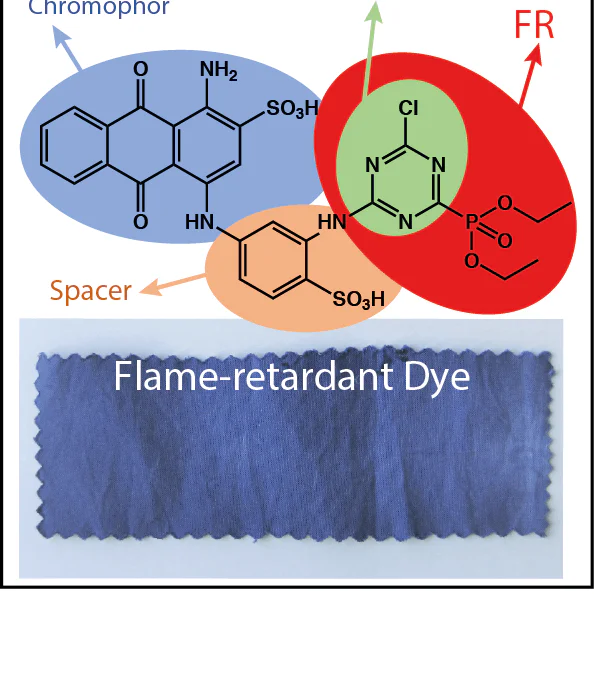
German Government funded DTNW project will develop non-halogenated reactive fabric dyes with FR properties. Every textile finishing process involves washing and drying of textiles, which requires water and energy. By combining into one the two processes of dyeing and...
Phytic acid (a natural organophosphate) with ammonia gave a washable phosphorus nitrogen fire safety treatment for wool. Phytic acid (PA) is a phosphorus-rich organic molecule found widely in plant seeds, where it is a natural phosphorus nutrient store. PA was reacted...