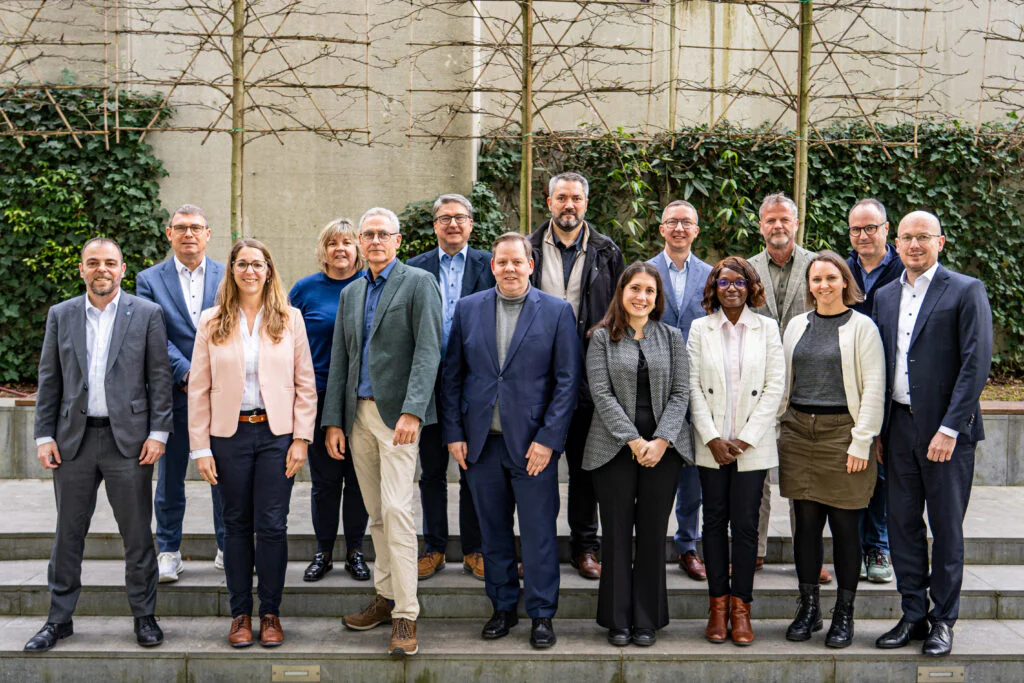
pinfa GA shows active policy work
Members’ meeting shows pinfa’s high level of activity in policy, PIN fire safety and chemicals regulation. pinfa's General Assembly, 18-19 March, Brussels and online, brought together over 30 participants. The pinfa Board and the Cefic team working for pinfa (Esther, Francesca, Myriam and Hannane) presented the 2025 Activity Report (reserved for Members). pinfa now has 28 members and 2025 showed over 80 pinfa working meetings, conferences and workshops, with pinfa addressing over 20 identified topics. pinfa communications include Q&A’s, videos, social media (>1100 LinkedIn followers), the pinfa website, and the pinfa Newsletter (>1600 subscribers).
Thomas Futterer, Budenheim, the new pinfa Chairman underlined the challenges and opportunities facing the PIN flame retardant industry, which is at the centre of fire safety, sustainability and circular economy. He presented pinfa’s activities to take industry forward, defining strategy, and addressing specific questions through pinfa’s active Working Groups. Discussion underlined the essential role of PIN flame retardants to enable industry sectors identified as ‘strategic’ by the EU, such as renewable energies, batteries, digitalisation and defence.
The pinfa Board strategy meeting early 2026 reported that pinfa brings high added value to Members through outreach and dialogue with regulatory processes and policy makers, and work with OEMs and flame retardant users on sustainability and recycling.
pinfa's proactive work underway was presented, in particular on the EU Chemical Strategy for Sustainability, evaluating migration of PIN FRs in polymers, preparing for regulatory questions on organo-phosphorus PIN FRs and melamine derivatives.
Carolyn Pressley, Budenheim, updated on pinfa North America: today 17 members, including active participation in many events and exhibitions and work with Ecotek to partner with schools and students (see pinfa Newsletter n°170).
Demi Tang, Clariant, updated on pinfa China: today 12 members, 2700 followers on WeChat, active presence at major industry conferences, working groups on PIN FRs in automotive plastics recycling and on high-rise buildings.
Breakout sessions enabled the pinfa members to discuss priorities for policy work: cooperation with the value-chain on Classification of some PIN FRs, taking forward studies on recycling of PIN FR polymers, optimising information for pinfa members and communication of pinfa’s actions.
The pinfa General Assembly welcomed a presentation from Georg Streck, European Commission DG GROW F1 (chemicals), updating about preparation of regulatory actions on aromatic brominated flame retardants, and about data collection on aliphatic brominated and certain organophosphorus flame retardants. He presented Commission support for substitution to environmentally preferable solutions. This presentation will be summarised in next month’s pinfa Newsletter.